Friday, July 27, 2012

Flavor Awakenings

I remember the exact moment my taste buds came of age.
Throughout those early years, when my single parent, working mother was flush enough to splurge on donuts for my brother and I, that burst of brown sugar and cinnamon on crumb donuts was comfort food. Breaking off a portion of the corn syrup-infused crusty ridge on an Old Fashioned was pure decadence, requiring china plates and fresh lemonade in mini tea cups on my folding card table with rusty hinges in the back yard, next to the wall of hydrangeas. There was more sugar in those outer ridge chunks than dough. Like hard candies; little icebergs of glucose calving off of tooth decay glaciers. A conspiracy to find uses for subsidized corn, overflowing in silos somewhere.
My brother on the other hand, already freckled front and back like an exploded pomegranate, would emerge from the pink pastry box with his face, arms, hair and tee shirt decorated in red goo. Jelly donut filling always reminded me of the globs of blue ooze passed underhand from desk to desk, front to back in 4th grade classrooms when The Blob was first terrorizing small airstream diners. If there was a shred of real fruit in there, then my beloved Big Stick popsicle qualified for that food group. Even fruit flies are fooled.
When I started baking pies, about age 10, I preferred mince meat or pumpkin, nothing that ever mimicked that gooey stuff my brother wore. Maybe that was a sign I was destined to be different.
Enter The Moment: There I was sitting on the neighbor’s back porch, I was 11 or 12, listening to another neighbor play guitar perched on a rock in the sloping grassy yard. He was a carpenter, and a surfer, like everyone else in the canyon. Bonnie sat down next to me, the essence of a Nature Girl, with brown hair to her waist and a parade of dogs, horses and birds dancing along behind her wherever she went. Her skirt was full of ripe loquats. They must have been magical loquats. With one bite the Matrix was revealed; the difference between tree-ripened fruit and facsimiles fermenting on the windowsill was the story of Portuguese armadas being launched to secure a steady source of spices from over the edge of the Known World.
At that moment, I’m sure clouds of butterflies emerged from an earthen carpet of fallen leaves, lions shook hands with gazelles and tropical birds spread their wings protecting rainforests from bulldozers. Now the figs and apricots and oranges in the trees around my own house became three-dimensional. I waited patiently for the apricots to turn from orange to red, for the figs to blush burgundy. I woke early and watched out my bedroom window on almost-ripe days for the moment I could rush in and beat the orioles to the harvest.
And then came avocados.
Now that refined sugar was unmasked as the Grim Reaper of natural flavor, I was willing to try again some “adult” foods, so long as they weren’t white or boiled. But avocado had a stigma: it was rich – too subtle and filling, bland like butter or whole milk. Foods that couldn’t be chewed were suspect.

I remember this moment too. Getting off the school bus with Claudia, another fifth grader, the only other girl in the neighborhood anywhere near my age. We’d head into her family's beach house with the glass wall facing the surf at the point, sit on the floor outside her room, throw on a vinyl of Carole King’s Tapestry and do macramé till it was time to raid the kitchen. That’s where she introduced me to matso topped with a healthy scoop of ripe avocado, sprinkled with salt. It became a ritual, and one of my forever comfort foods. Of course now I honor salads by lacing them with avocado.
 
  Then came coffee: age 13 or so, after a 30-hour storm while on a sailboat with family at Thanksgiving. We grabbed the mooring lines from buoys both front and back while attempting to secure shelter on the lee side of Catalina Island in Avalon Bay. Two of four heavy lines we were tied to snapped overnight and the seas in our harbor were so high we clocked 8 miles while at anchor. Chilled to the bone, tired of working wet deck lines, breathing the stench of the diesel engine, my stomach empty from seasickness, when the ocean calmed enough to assess the damage, my mother made us all thick cups of freeze-dried coffee. I wrapped the damp, salty sleeping bag around me, perched on top of the cabin and watched the dawn. Coffee became the taste of survival.
Through the years, I have picked wild herbs and artichokes with Hmong refugees in vacant lots in Seattle. Lived off guavas and mangoes on a jungle trail. Cut sugar cane with a machete and boiled it into cane syrup at my brother’s place in Florida. Feasted on wild mushrooms carefully selected by aficionado Cate Hawthorne in the forests of Ft. Bragg. Admired but declined Jeff Laxier’s fresh-plucked-while-free-diving abalone being grilled, but the story’s the same: fresh, ripe, organic. Anything else is sucking the life out of us.
To quote Mary Pipher’s lovely book “Writing to Change the World,” she says, “We are a nation good at consuming, but poor at savoring.” Elsewhere she adds a quote from comedian George Carlin, extending the metaphor to include consumption on a grander scale: “Trying to be happy by accumulating possessions is like trying to satisfy hunger by taping sandwiches all over your body.” Nuff said.

Thursday, July 5, 2012

Living In Bubbles

A friend recently treated me to seeing a production of Wicked, wherein we learn that the wicked witch of the west is not quite so wicked. The best line in the show was when Elphaba (supposedly wicked but not so) and Galinda (supposedly good but wickedly narcissistic) are trading barbs and Elphaba says "Not everyone travels in a BUBBLE."
Of course, since the show if rife with euphemisms, this one is not lost on the audience. Galinda lives in a world of her own creation, sees nothing outside that sphere as real or noteworthy, and expects others to eventually realize she is indeed the center of the Universe.
I had this bubble theme running through my head as I floated aimlessly through the San Diego County Fair. Here were thousands of people I never would have encountered otherwise, all who came to leave their harsh reality bubbles and wiggle into a fresh one filled with bright colors, funnel cakes, soft stuffed Sponge Bobs, mystery fried foods, rides, permission to scream in terror, endless people watching and ribbons ribbons ribbons for the crafts people spend entire winter seasons locked away in garages manufacturing.
An entire building was filled with the promises of late night television come to life: the magic star peeler, the brush that gets every cat hair off your sofa, a tool to burn your name into wood, spas, massage chairs, kitchen knife sets, chia pets, wheels of fortune, handwriting analysis, hydroponic grow lamps.
The promises promises promises of hawkers selling dart games, ring tosses, water pistol races, handing you a baseball and daring you to break a beer bottle. A chance to prove yourself. And bring home a prize for your sweetie.

But will it last?
I suppose we need to have a way to make believe that make-believe can be made believable. So we keep mementos. Not the kind Guy Pearce suffered in cinema: living in reverse; well, then again, perhaps just like that.
We keep toys, lockets, we keep photos. See? It was real. I have the photos to prove it.
I floated through the fair with a point-n-shoot, subject to delays. So I grabbed random moments, happy to leave the big obvious cameras at home.
Another friend just told me I should be the next Andy Rooney, allowed to take a subject like cotton candy or star peelers and run with it stream of consciousness, connecting dots.
But I'll give it my best shot here. Peeking into other people's moments, or are they visiting mine?

Saturday, June 30, 2012

Cleaning House in the Woods


Who left the door open?
Is that a stink bug? Centipede? Scorpion? Please don’t make him mad!
Really, how many hours can a person spend vacuuming into the dark crevasses where carpet meets wall? Where dust and decaying insects merge in an aluminum window frame?  Until it’s done, I imagine, since everything looks so fresh when the dead flies have all been removed, though I daresay many an arachnid will go hungry tonight when they discover their anticipated sumptuous feast has been pilfered. 
And they have to be hungry all the time. These little guys work hard. Anyone who has ever heard the sound of natural Velcro ripping when separating the folds of a curtain can appreciate the insane industriousness of these tireless creatures.  Tall condominiums of webbing are demolished in our thoughtless pursuit of cleanliness.
I catch my forehead against a thin strand in flight across the living room. Where is she, this Cristo of the insect world? How does she make those tornado cones of webbing in the windowsill? And when two spiders face off at the site of an unlucky moth’s demise, are they polite?
You gonna eat that?
At least the big one wiped her feet when she waltzed into the kitchen from the back door.
The children playing in the rock room late at night saw her first. We, the adults, were all sipping cocktails on top of the granite boulders outside, watching for falling stars. Big spider in the kitchen, they said. “ I’ll take care of that,” I smiled as I slipped back in through the living room window, thinking “these city kids, how cute that they’re afraid of spiders. “
But, hmmm. Yes, well, they were not exaggerating. Our guest was forced to spend an undignified night in a glass jar (with holes in the lid) until she was identified the next morning by our park ranger neighbor as a harmless female brown tarantula. Delighted that this creatures was now friend, not foe, the kids took turns putting their hands beside her for comparison (she won) as she inched her way to freedom into the weeds. I’m sure she was the talk of several elementary schools that week. “Yeah sure, how big?”
 Not all guests are so harmless.
While sweeping the kitchen floor, I glanced into the office, looked down, back up, and put the broom down. The jar trick wasn’t going to work for this guy. A juvenile Southwestern Rattlesnake is too fast for me. But maybe he’ll leave on his own? If I turn my back and he’s gone, I can’t be sure of which dark cupboard, or which warm comforter, he’s crawled into. Isn’t this a fine pickle? I hated to drag him away from his Upwords Scrabble game; perhaps he was merely trying to improve his vocabulary. And what’s the harm in that? But I had work to do.
A half an hour of dancing with snake placed this young gentleman under a sizable mixing bowl. The tricky part was inserting a thin cutting board underneath quick enough to keep him from escaping. Really, it makes one want to give up house cleaning and move out to yard work. 
Yes, something easy, like emptying the buckets of the rainwater, … only to discover the poor little field mice that found out the hard way they can’t swim. Where is the neighbor’s cat when you need her? Sleeping on the job, or at least on my front porch armchair.
Maybe gardening then: something less confrontational. Let’s see: gloves, pick axe, hat, chainsaw…  and after an exhausting day in the sun moving rocks and brush isn’t it nice to come home to a clean house?

Friday, June 1, 2012

Working on my trucker's tan


Simple directions: Get on I-15 north and drive 5-6 hours. Turn east, half an hour till the freeway ends at the only stop light in Boulder City. Find a motel and a pub and I’ll see you in the morning at the Starbuck’s.
Road trip!
Armed with appetizing accessories in the passenger seat: Motown greatest hits, a bowl of watermelon, sliced raw red peppers, Lightening Hopkins and a Mountain Dew.
East L.A. is home to the golden “firme” oldies of the ‘60s where low rider meets the surf set and everyone just got along, mostly; when R&B was soulful and the drum machine hadn’t been invented. It’s also the birthplace of urban non-sequiturs like the faded oversized plastic palomino on a stick looming over a storage facility.
The trick is to get through Corona in fourth gear. Corona is a vortex in which everyone living in Riverside and L.A. counties are required to pass through twice daily. There are four traffic lanes in each direction and an inside shoulder wide enough there ought to be a commuter lane, but only serves to collect the unfortunate carnage of couches and appliances. Reminds me of that awesome book by Melissa Fay Green, Praying for Sheetrock; about a clandestine community living amongst the pines, surviving on freeway flotsam at a treacherous interstate exchange in Georgia while the local sheriff looked the other way.
 Just as I’m pondering this wide inside freeway space, said space is consumed by a temporary wall and a long field of fill dirt, dotted with earth-movers, not remotely moving. If these are my tax dollars at work, they’re taking an awfully long unauthorized cigarette break because at 3:45 p.m. they are abandonded.
Massive wide loads of what look like tubes for a nuclear plant weave across three of those lanes, with their little parasitic support vehicles buzzing at their heels. I weave through them up and over the Cajon Pass, pounded by winds at Lake Elsinore; the L.A. basin is now just a memory.
As oldies give way to freeway country music on the radio, a sign suggests Barstow.
Yet there is nothing taller than three feet living out here, for hundreds of miles in all directions.
Until an oasis of gas stations appears. The guys flipping advertising arrow signs at the edge of the offramp are from competing gas stations: Arco and Valero. It’s a price war. Only they have the same prices. Two young Russian couples hand roll harsh tobacco looking metro chic outside the Starbuck’s attached to the Arco station.
And in a few more miles: Billboards! Alien Beef Jerky! Now we’re talking. Not sure if this stuff is veggie approved, but we gotta take a peak. And Bun Boy Restaurant and Motel. I wonder how many tweekers it took to think that one up?
 
Farther still, a sign announcing the California Welcome Center. Amen’t I welcome yet? I started in San Diego.
You know you’re in Nevada when castles and blinking lights tower out of the sands like a strange (bad) dream out of a deep subconscious fear of cities. This of course leads to the biggest mirage of all: Las Vegas, at dusk, just enough light to see the necessary exit to high tail it out of there.
Hmmm, wonder how she got that shot?


El Rancho Boulder Motel is three blocks from the Boulder Brewing Company. Through the brewery windows, a hockey game glows on the t.v., behind chairs stacked on the tables, the place having closed a half hour earlier. And the bar next door doesn’t carry BBC beers. Hmmm, there’s a story here.
But the story I came for is water, and how quickly we’re sucking Lake Mead dry. So quickly they’re tunneling underneath it for three miles and putting a third intake pipe there because the other two are already compromised by our rate of consumption and also of evaporation.
I can commiserate about the evaporation. By noon I had gone through two liters of water and two quarts of Gatorade. The sweat is ripped right off your skin, leaving salt ripples. I could attract four-legged animals in a pasture with this skin. Things don’t melt here. Melting implies there’s moisture in the end product. Here it’s more like things are freeze-dried or turned to pillars of salt.
It’s a simple fix really, on the lake. A canvas pool cover. They could employ the local swim teams to pull it across the lake, leaving a few areas open for recreational boats. How hard could that be?
Doing the speed limit headed back south, the desert is mind numbing on this edge of the Mojave National Preserve. This is where the undead of one-hit wonders live freely in perpetuity on the airwaves. Can’t someone put a stake through Supertramp?
 At last, Yermo, and Peggy Sue’s 50s Diner. It must be a requirement that all roadside diners house lost dinosaurs and aliens.
Finally the temperature cools as I travel down through the Cajon Pass, anticipating the spread of humanity again, around that last mountain, to see: there it is… a basin of smog, like a hammer in your psyche. And Corona: second gear. Ah well, it is rush hour.
My skin feels the call of fresh water and a lathering of linden flower lotion. I even treat myself to a stop for fresh basil, escarole and feta cheese for a salad, and splurge $4.99 on a bottle of wine.
Ready for the next road trip! I promise, my next one, maybe. A video.

Tuesday, February 7, 2012

Mission to Milot

A turbo prop Saab 340 dropped into a patchwork of irregular green squares leading up to impossible mountains peaks. From out of the clouds we were delivered to the stifling humidity of Cap Haitien airport, a small building divided down the middle for the coming and going.
Slow moving mounds of unspeakable waste bobbed down the stream in an open trench on its way from somewhere to somewhere else, paralleling the crowded main road. On the outskirts of a diesel landscape, paved lanes gave way to dirt where funding ran out, and suddenly we were dodging burros and goats on approach to Milot, our hospital compound home for the coming week.
We danced together with mosquito netting until our dorm was sufficiently chaste.
The tap water is diseased, the Coke too syrupy, but the beer is good; the town a blend of tropical Caribbean colors and decayed French colonial domination.
Hopital Sacre Coeur is a maze of concrete hallways, shabby plastic mattresses that can be hosed off, and loose wires hanging. Armed guards protect the compound from aggressive vendors selling fried incarnations of bananas or house pets. Random used latex gloves commingle in corners beside carcasses of weeks-old meals.

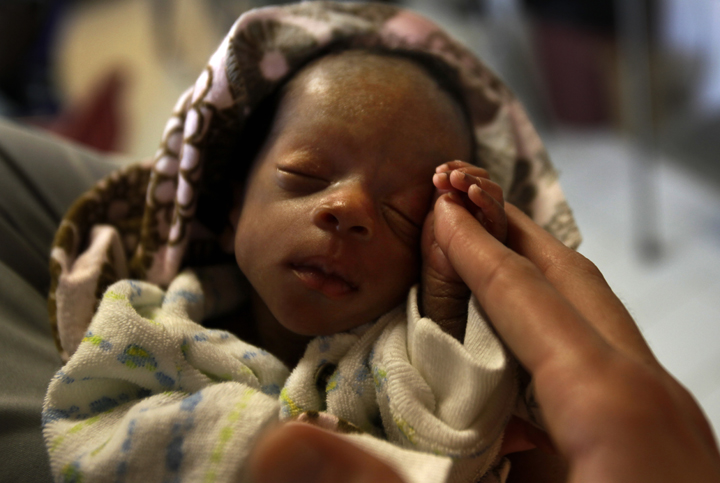
We are introduced to a solemn but happy NICU unit with infants and mothers seeking a miracle, as two men carry a stretcher through the yard bearing a body wrapped in a bloody cloth.

There is a full moon over Haiti tonight.
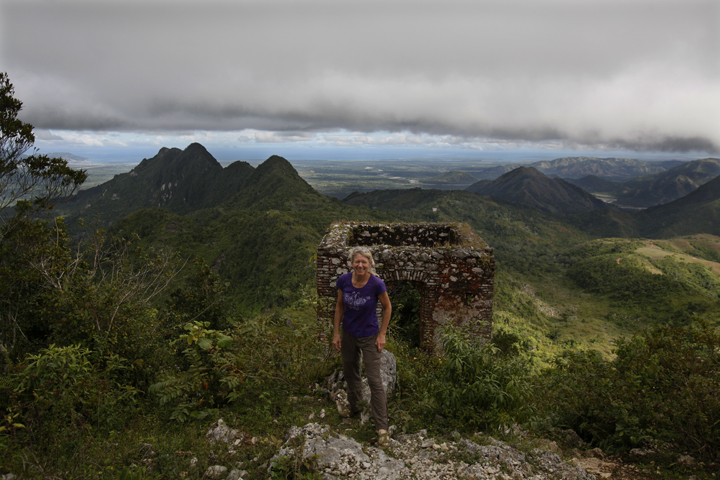
Neither the driving rain on the tin roof, nor the anxiety over the next day’s mission kept the nursing students from a sound sleep. Such was the strategic scheduling of the day’s expedition: hiking to La Citadelle, a five-mile slog up cobblestone streets, into a beguiling mist some 3,000-feet above the town. These people living along the side of the mountain with no water or sanitation, watching us pass, would be our patients.
 
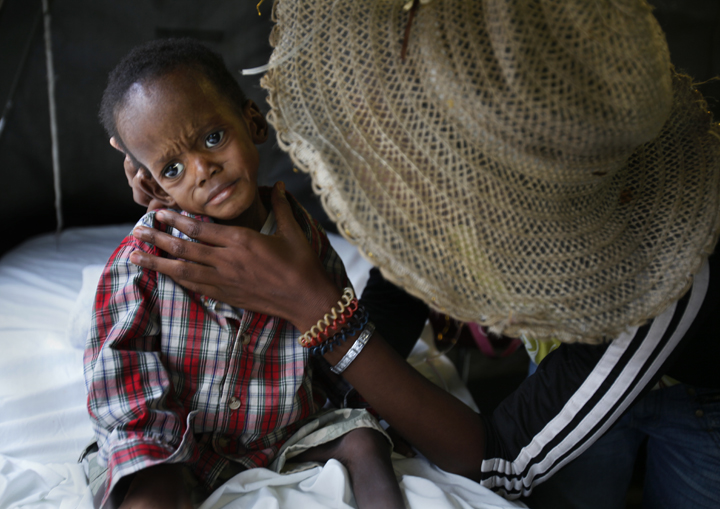
Morning rain flooded the cholera tent. Patients pushed their IVs and waste buckets to the patio shelter. Inside the neighboring canvas army tent, students Stacey Price, RN, and Amanda O’Keefe were trying to find a vein in a severely dehydrated young girl while a man my age gasped for breath through an oxygen tube on the next bed, and an immaculately dressed young woman with an innocent smile sat patiently in a wheelchair, leaning over her swollen leg, deformed by filiariasis, the open sores dripping onto the floor.
Relatives propped their shoulders against the opening of the heavy canvas tent, sometimes collecting a bed pan from their loved one, emptying its contents into the banana leaves just outside the tent. When the woman with heart failure and a swollen belly and legs from the anemia was moved to the hospital and her urine-soaked sheet stripped from the bed, it was the last sheet. 10:30 a.m.
No amputation for the man with gangrene today. Maybe tomorrow.
Nurses took turns holding the month-old preemie abandoned by its mother. Two students instructed new mothers in proper breast-feeding: the 17-year-old with twins sat on the floor and draped her upper body across the bed. The other, in a pale pink silk nightie, stared straight ahead as her two-day old wailed behind her. Racked with pain from her C-section she had assumed she had no milk to give him. Propping the baby on a pillow below her breasts, her son made up for meals missed. That evening, before dinner, we watched a C-section in an immaculate operating room, performed by a well-equipped team of Haitian doctors and nurses moving in seemless waltz to deliver an 8-pound baby boy named Carwyn.
It was not the rain on the roof but the voodoo drums that kept us awake past midnight.

These are nurses: before filing over to a breakfast of local grapefruit and French toast (go figure), all beds were neatly made, with mosquito netting taut at the corners. Discussing the despair over the lack of basic medical supplies, a handful of students proposed coming back to run a black market in masks, gloves, gauze and Tylenol.
They are ready for the real world.

My new best friends are the surgeon from Guinea Bissau who came to assist Haiti after the earthquake, and stayed on. He speaks perfect Spanish. And the female doctor from Cuba. Then there's the medical stenographer from Calgary.
Milot is a vortex for the medically gifted, wanting to help. But no one is immune. The radiology team from Boston is down for the count.
It is a medical question here when one asks whether you are (able to) eat rice and beans for lunch.

Motionless children in their Sunday dresses try to smile through exhausted dark eyes lying prone in their cholera beds: a wooden plank with a hole cut in the middle; a plastic bucket strategically positioned underneath.
 The ladies seated beside the tightly-spaced beds on the second floor are knowing me now, from the day before, when I was kind, wordlessly acknowledging their efforts to care for a loved one in the hopeless ward. Today they welcomed me where they were cooking and washing, because I am a woman, and women are collaboratively nurturing. It was non-verbal; universal, sweet.
 But some women can be negligent. My African doctor pulled no punches berating the mother of a 2-year-old with malnourished, sunken eyes and the largest stomach tumor he'd ever seen. The child looked 80-years-old. He had shown signs of a tumor in November, yet she is only now seeking help. He said he hadn't seen anything like this since Africa. The ignorance of some parents, he said, is killing defenseless children.
  The security guard has the rum. $12 for the three star, $14 for the five star. We're all laughing under the full moon, to forget some of what we've seen. But as I turned off the light, peeling back the curtain onto the courtyard, I watched our doctors holding down one of the compound dogs, putting an end to his wicked ways. In the morning I wrote:
They killed the dogs last night.
Around midnight.
They caught Quattro on the porch, weaving through the knees
At the poker table,
seeking a morsel or a scratch behind the ears.
They did it in the courtyard outside the kitchen door
 these doctors in scrubs
With their needles, arms crossed, sure their methods were sound.
Nurses and students came to their doors, some walked circles crying
Around the pack of doctors preying on the compound mascot
As he wailed a primordial plea for mortality.
BigLove and MamaTits they caught down the road.
But we still heard it. Doors slammed, muffled tears and quick conversations
Floated over the walls and wafted towards the waning moon.
They’d killed chickens. Attacked a Haitian pediatric nurse walking alone.
The conversation was short.
If the Haitians think we value the dogs more than we value them, what’s to be done?
Sister Anne said the big black one was clever. They had to entice it with food.
It was hard on everyone in the end, she said in her lyrical Irish way, very hard.
It’s what she said yesterday morning
Bringing food to a skeletal woman in the wound care ward
 whose family had abandoned her.
In the morning before dawn
I stepped cautiously across the killing floor to fill my water bottle
On the porch where a stethoscope hung from the iron window grate.
Jason Malig forgot how small the beds are. He’d rolled over in his sleep and woke to find himself suspended in air, arms outstretched, caught like a fly in his mosquito net. The streets were quieter this day, the second anniversary of the earthquake that brought hundreds of wounded and volunteer doctors to this rural town of 25,000 souls. All that remains are the six long canvas army tents that still serve as spill over clinics and a mural. The only marking of the memory is a four day weekend for schools and the hospital clinic.
 The cholera epidemic was imported by visiting U.N. peacekeepers from Nepal carrying a Bangladeshi strain of the disease in October 2010. Haitians are now wary of all U.N. workers, who travel in white jeeps, dressed in fatigues carrying weapons.
  In the women’s wound care ward, Sister Anne brought juice, fruit and bread to the emaciated young woman with necrotizing fasciitis, a fungus that is eating away at the remaining skin on her stomach and thighs. 
Dr. Sisse was draining a massive leg infection into a bucket, cutting gangrene from a woman’s big toe, taking vital signs from a woman with breast cancer so severe it had consumed her nipple from the inside out.
Haitians often seek care from a local herb or voodoo doctor before coming to the hospital. One voodoo doctor poured oil over a woman’s belly during a troubled labor, then set her on fire to release the demons. The baby was saved but the mother could not hold him for eight months. A man died from a root doctor’s treatment for hiccups. By the time doctors at Hopital Sacre Coeur see people, it might be too late to do more than amputate a dead limb or simply house the patient till they die.
We were all summoned to the hospital. A distraught father was wringing his hands over his son, badly burned Madelin Innocent, 4. Thin gauze covered his little body, he was in shock.
A pot of boiling water fell on him the night before, but the tap-taps (truck taxis) had stopped running, so the family had to wait until morning to bring him in. The boy’s clothing had fused into his skin in places.
  In a triage of international languages, the team administered a vile of valuable morphine, and Malig, the former combat medic, hummed softly to the boy as Dr. Sisse, three students, two nurses set to work scrubbing and debriding the burned skin, then anointed the wound with Silvadene cream, a topical treatment no longer used in the U.S.
That evening Yniole Charles, 39, gave birth to her third child. An eight-pound girl entered the world with barely a moan from her mother. She was caught by veteran Haitian nurse Tanya Paul and two students. The baby’s father was anxiously waiting in the maternity ward and proudly shook everyone’s hand when he saw his wife and daughter gingerly tucked into bed.
  “Bet you never thought you’d be off-roading in an ambulance,” someone said as the entire group bounced along the rutted road to the village of Thibeaut. A hospital outreach worker with a megaphone alerted the community on Wednesday that a medical team would be at the church on Friday. And there they were: 80 faces from knee high to stooped over, dressed in their very best, singing a hymn in Creole by way of welcome.
  All of us wanted to meet Jean Lomsina, 102. She had never seen a doctor and walked to the church with her cousin, Cleanyanta Lendor, a sprightly 89. “She’s obviously doing something right,” said student Derrick Duarte. “Her blood pressure is better than mine.”
The team had only a few daylight hours left that afternoon to barter on the street and poke their heads into the cemetery where the gate was finally unlocked. A groundskeeper, if one can say the grounds are kept, reached into one of the caskets dug up and deposited above ground for lack of payment, and pulled out the skull, hair and all. Goats pranced and did what goats do best among the once stately grave markers.
  One of the vendors handed us a book that translated English into French and Creole. Lesson 13 was titled: “Jean is looking for work. Today is not Jean’s lucky day.” Fortunately, Jean got lucky in lesson 14. The average annual income in Haiti is $400.
  Just as we returned to the compound gates, a funeral passed solemnly by, towards the cemetery.
That night and throughout the next day's 17 hours of travel home to San Diego, the talk was of chai lattes and curling irons, football and drinking water from the tap.